

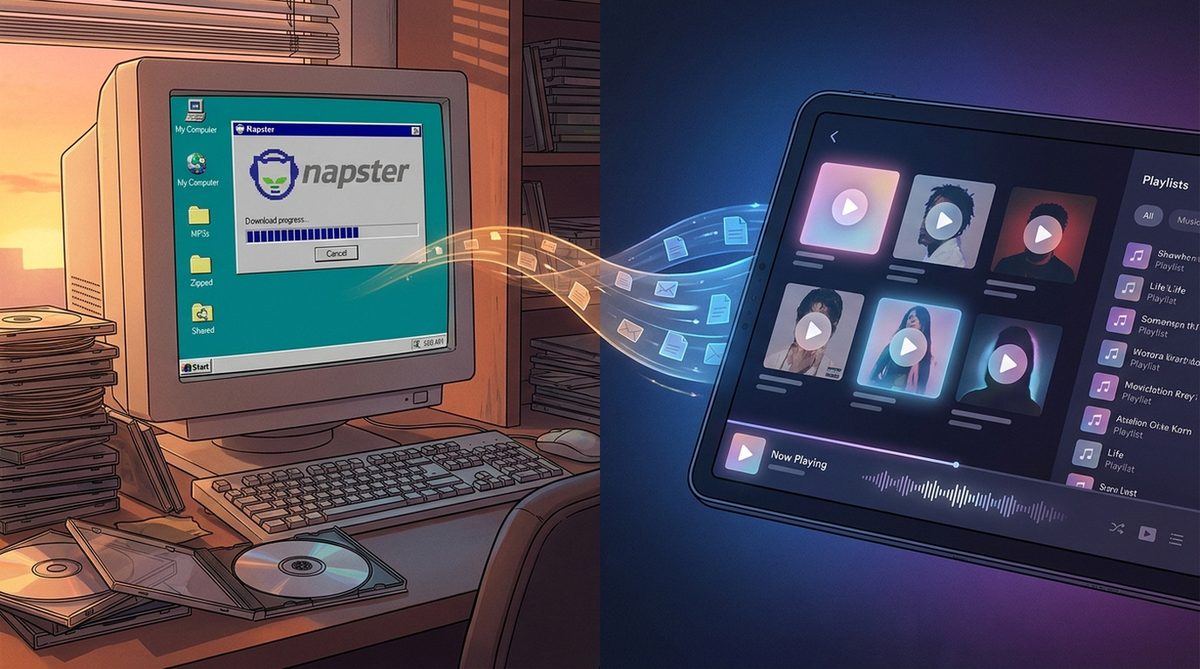
The journey from piracy to streaming is a fascinating tale of technological disruption, legal battles, and ultimately, innovation. For decades, the entertainment industry grappled with the unauthorized distribution of its content, fearing its demise. Yet, paradoxically, the very act of file sharing ultimately pushed media companies to evolve, leading directly to the robust ecosystem of streaming services we enjoy today.
This article traces the remarkable arc from the revolutionary rise of Napster to the fragmented landscape of modern streaming. We will explore how the challenges posed by widespread digital sharing forced industries to rethink their entire approach to content delivery, pricing, and user experience, fundamentally shaping the media evolution we’ve witnessed.
The Genesis of Digital Disruption: Understanding File Sharing History
In the late 1990s, the internet began to democratize access to information and, inadvertently, to copyrighted material. This era marked a pivotal moment in file sharing history, setting the stage for a seismic shift in how media was consumed and distributed. The music industry, in particular, was unprepared for the digital tsunami.
The ease of converting physical CDs into digital MP3 files, combined with burgeoning internet speeds, created fertile ground for new distribution methods. Consumers, empowered by technology, sought more convenient and often free ways to access their favorite songs. This demand would soon be met by a groundbreaking, albeit controversial, platform.
Napster’s Rise and Fall: The MP3 Revolution
Launched in 1999, Napster quickly became a household name, offering a peer-to-peer file sharing service that allowed users to easily swap MP3 files. It was an unprecedented phenomenon, giving millions access to vast music libraries without cost. The user experience was revolutionary for its time, simple and intuitive.
While wildly popular with users, Napster sent shockwaves through the music industry. Record labels and artists saw their livelihoods threatened by what they perceived as rampant theft. This led to a series of high-profile lawsuits, culminating in Napster’s shutdown in 2001, but the Pandora’s Box of digital distribution had already been opened.
The Legal Backlash and Industry Panic
The battle against Napster was just the beginning. Other file sharing platforms like Kazaa and Limewire emerged, continuing the challenge to traditional media models. The entertainment industry, initially slow to adapt, responded with aggressive legal action and Digital Rights Management (DRM) technologies, often to the frustration of legitimate users.
This period of intense conflict highlighted a fundamental disconnect: consumers desired digital convenience, while the industry clung to physical distribution. The stage was set for innovative companies to bridge this gap, learning from the lessons of illicit file sharing rather than simply fighting against it.
From Illicit Downloads to Legal Purchases: The iTunes Revolution
The vacuum left by Napster’s demise presented a unique opportunity for legitimate alternatives. Apple, under Steve Jobs’ visionary leadership, recognized that the key was to offer a superior, legal experience that matched the convenience of piracy. This realization led to one of the most significant turning points in the piracy to streaming narrative.
Apple’s strategy was not just about technology; it was about understanding consumer behavior and offering a compelling value proposition. They aimed to make buying digital music easier and more appealing than pirating it, a bold challenge to the status quo.
Apple’s Masterstroke: Pricing and User Experience
In 2003, Apple launched the iTunes Music Store, offering individual songs for 99 cents and albums for a reasonable price. This transparent and consistent pricing model was a game-changer. Coupled with the seamless integration of the iTunes software and the iPod, it created an unparalleled user experience.
iTunes demonstrated that consumers were willing to pay for digital content if it was accessible, affordable, and easy to use. It effectively legitimized digital music, proving that a well-designed legal alternative could compete with, and ultimately surpass, the appeal of illegal downloads. This was a crucial step in the broader media evolution.
The Shift in Consumer Behavior
The success of iTunes marked a significant shift in consumer behavior. People began to associate digital music with ownership and quality rather than just free access. It also forced other music retailers and labels to reconsider their digital strategies, paving the way for further innovation.
This era proved that convenience and a fair price could effectively combat piracy. It laid the groundwork for future subscription models by demonstrating that digital content could be a viable and profitable business, provided the user experience was prioritized. The lessons learned here were invaluable for the impending streaming revolution.
The Ascendancy of Streaming Services: Spotify and Netflix Lead the Way
While iTunes tamed music piracy by offering legitimate downloads, the next wave of innovation pushed beyond ownership to access. The rise of broadband internet made continuous streaming feasible, opening new possibilities for both music and video. This transition from piracy to streaming truly accelerated with the advent of dedicated streaming platforms.
These services understood that consumers wanted instant access to vast libraries of content without the hassle of downloading or managing files. They offered a new paradigm: subscription-based access, often with personalized recommendations and multi-device compatibility.
Spotify’s Subscription Model: A New Paradigm for Music
Spotify, launched in 2008, revolutionized music consumption by offering a freemium model that combined free, ad-supported streaming with a premium, ad-free subscription. Its vast catalog, seamless user interface, and robust recommendation engine made it incredibly appealing. This was a direct response to the lingering appeal of free music from file sharing.
By prioritizing user experience and offering an unparalleled selection, Spotify effectively marginalized music piracy. It proved that convenience, discovery, and a low monthly fee could outweigh the perceived benefits of illegal downloads, cementing the shift from piracy to streaming as the dominant model.
Netflix’s Content Empire: On-Demand Video Takes Hold
Simultaneously, Netflix transformed video entertainment. Starting as a DVD-by-mail service, it pivoted to streaming in 2007, offering an expansive library of films and TV shows for a flat monthly fee. Its early focus on licensing content, followed by massive investment in original programming, cemented its dominance.
Netflix directly addressed the frustrations of traditional TV schedules and the search for specific shows via illegal means. Its on-demand model, personalized recommendations, and high-quality streaming experience made it an irresistible alternative to video piracy. This marked a monumental step in media evolution, moving entertainment into a new digital era.
How Streaming Services Addressed Piracy’s Appeal
The success of Spotify and Netflix wasn’t accidental; it was a deliberate strategy to outcompete piracy on its own terms. They offered:
- Convenience: Instant access to vast libraries from any device.
- Affordability: A single, low monthly fee for unlimited content.
- Quality: Reliable streaming, often with high-definition options.
- Legitimacy: Peace of mind for consumers and fair compensation for creators.
These factors collectively diminished the incentive for illegal file sharing, showcasing how innovation driven by consumer demand could effectively combat piracy’s allure.
The Post-2020 Landscape: Fragmentation and the Return of Piracy to Streaming
For a period, it seemed streaming had largely won the war against piracy. However, the landscape has dramatically shifted since 2020, leading to a new set of challenges. The success of early streaming services inspired a proliferation of new platforms, each vying for subscriber attention and exclusive content. This phenomenon has inadvertently created conditions ripe for a resurgence in piracy to streaming.
The current environment is marked by an overwhelming number of choices, often at a significant cumulative cost. This fragmentation is testing consumer patience and budget, prompting some to reconsider illicit alternatives.
Too Many Services, Too Many Subscriptions
Today, consumers face a dizzying array of streaming options: Disney+, HBO Max, Paramount+, Apple TV+, Amazon Prime Video, Hulu, Peacock, and many more. Each service holds exclusive rights to specific shows and movies, forcing users to subscribe to multiple platforms to access all their desired content.
The cumulative cost of these individual subscriptions can quickly surpass what many are willing or able to pay. This financial burden, coupled with the inconvenience of juggling multiple apps, creates a significant pain point for the modern consumer, reversing some of the earlier gains in the fight against piracy.
The Inconvenience Factor: Why Users Revert to Illicit Methods
Beyond cost, the fragmentation also introduces an inconvenience factor. Remembering which show is on which platform, navigating different user interfaces, and dealing with varying content libraries can be frustrating. This complexity stands in stark contrast to the simplicity offered by pirated content, which often aggregates everything in one place.
As the streaming market becomes oversaturated and less user-friendly, a segment of the audience is once again turning to illegal file sharing. This re-rise of piracy demonstrates that the battle for consumer loyalty is ongoing, and convenience and value remain paramount, even in the age of abundant legal options.
The Unintended Catalyst: How Piracy Drove Media Evolution
Looking back, it’s clear that the threat of piracy was not just a destructive force; it was a powerful, albeit unwilling, catalyst for innovation. The challenges posed by widespread file sharing forced the media industry to confront its outdated business models and embrace digital transformation. This pressure ultimately led to the sophisticated streaming services we have today.
Without the existential threat of piracy, it’s debatable whether the industry would have moved so swiftly and decisively towards more consumer-friendly digital solutions. Piracy, in a perverse way, accelerated media evolution.
Innovation in Pricing and User Experience
The direct impact of piracy can be seen in the innovative pricing models and vastly improved user experiences of modern streaming. Flat monthly fees, personalized recommendations, and multi-device compatibility are all features designed to offer a superior alternative to illicit downloads.
The industry learned that convenience, accessibility, and a perceived fair price were more effective deterrents to piracy than legal threats alone. This consumer-centric approach, born out of necessity, has fundamentally reshaped how we consume entertainment.
Adapting to Consumer Needs
Ultimately, the journey from piracy to streaming is a testament to the power of adapting to consumer needs. While piracy presented a significant challenge, it also highlighted a clear demand for instant, digital access to media. The companies that succeeded were those that listened to these underlying desires and built legitimate services to meet them.
The ongoing re-rise of piracy in the face of streaming fragmentation serves as a fresh reminder. The media industry must continue to innovate, prioritize user experience, and offer compelling value to keep consumers engaged with legal platforms.
The Enduring Legacy: Media Evolution Driven by Demand
The story of piracy to streaming is far from over. It’s a continuous cycle of innovation, adaptation, and response to consumer demand. The media landscape will undoubtedly continue to evolve, driven by technological advancements and shifting user expectations.
The core lesson remains: provide consumers with convenient, affordable, and high-quality access to content, and they will choose legal options. Fail to do so, and the ghost of file sharing will continue to haunt the industry.
Frequently Asked Questions
What is the primary difference between piracy and streaming?
Piracy refers to the unauthorized copying and distribution of copyrighted material, typically for free, without permission or payment to the creators. Streaming, conversely, involves accessing content legally through authorized services that pay royalties to rights holders, usually via a subscription or ad-supported model, without permanent file download.
How did Napster influence the music industry’s media evolution?
Napster, despite its illegal nature, demonstrated the immense consumer demand for digital, easily accessible music. Its success forced the music industry to acknowledge the digital shift and eventually led to the development of legitimate digital download stores like iTunes and later, subscription streaming services like Spotify, fundamentally altering music distribution.
Why did streaming services like Netflix and Spotify succeed against file sharing history?
These streaming services succeeded by offering a superior user experience, vast content libraries, and convenient access for a reasonable price. They provided a legal, reliable, and user-friendly alternative that outweighed the perceived benefits and risks of illegal file sharing, thus driving the shift from piracy to streaming.
What role did iTunes play in the transition from piracy to streaming?
iTunes was a crucial intermediary step. It legitimized digital music purchases by offering individual songs at a fair price and a seamless user experience with the iPod. It proved that consumers would pay for digital content if it was convenient and affordable, paving the way for the later success of subscription-based streaming services.
Why is there a re-rise of piracy despite the prevalence of streaming services?
The re-rise of piracy is largely attributed to the fragmentation of the streaming market. Consumers often need multiple subscriptions to access all desired content, leading to high cumulative costs and inconvenience. This complexity makes aggregated pirated content more appealing to some users.
How did piracy drive innovation in pricing and user experience for streaming services?
Piracy forced the media industry to innovate by demonstrating what consumers truly valued: convenience, accessibility, and affordability. This pressure led to the development of user-centric features like flat monthly subscriptions, personalized recommendations, and multi-device access, all designed to offer a superior legal alternative.
What is meant by media evolution in the context of file sharing?
Media evolution in this context refers to the fundamental transformation of how media content is created, distributed, and consumed. It encompasses the shift from physical formats to digital downloads, and then to subscription-based streaming, largely driven by technological advancements and consumer demand, often initially fueled by illicit file sharing.
What lessons can the media industry learn from the journey from piracy to streaming?
The primary lesson is the critical importance of adapting to consumer needs. Offering convenient, affordable, and high-quality access to content is the most effective way to combat piracy. Continuous innovation in user experience and pricing models is essential to maintain consumer loyalty in an ever-changing digital landscape.
Conclusion
The story of piracy to streaming is a complex narrative of challenge and transformation. What began as a disruptive force threatening the very existence of traditional media ultimately became an unlikely catalyst for innovation. From Napster’s illicit downloads to the sophisticated streaming services of today, consumer demand for accessible content has consistently driven media evolution.
As the landscape continues to shift, with new challenges like market fragmentation leading to a re-rise of piracy, the core principle remains: prioritize the user. By offering unparalleled convenience, fair value, and a superior experience, the media industry can continue to thrive. Embrace the future, innovate, and keep the content flowing—legally and seamlessly.